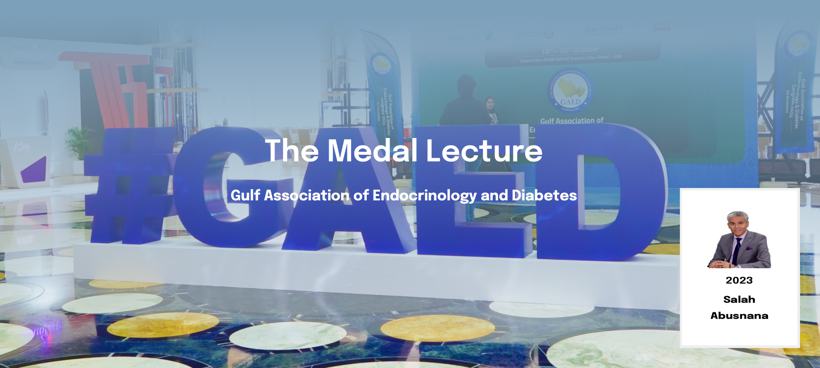
I am Professor Salah Abusnana, an endocrinologist in Sharjah. For thirty-five years I have divided my time between the clinic, the laboratory and the lecture theatre — because the best care comes from a doctor who is still asking questions.
MBBCh · MSc · PhD · FRCP · CCST (UK)
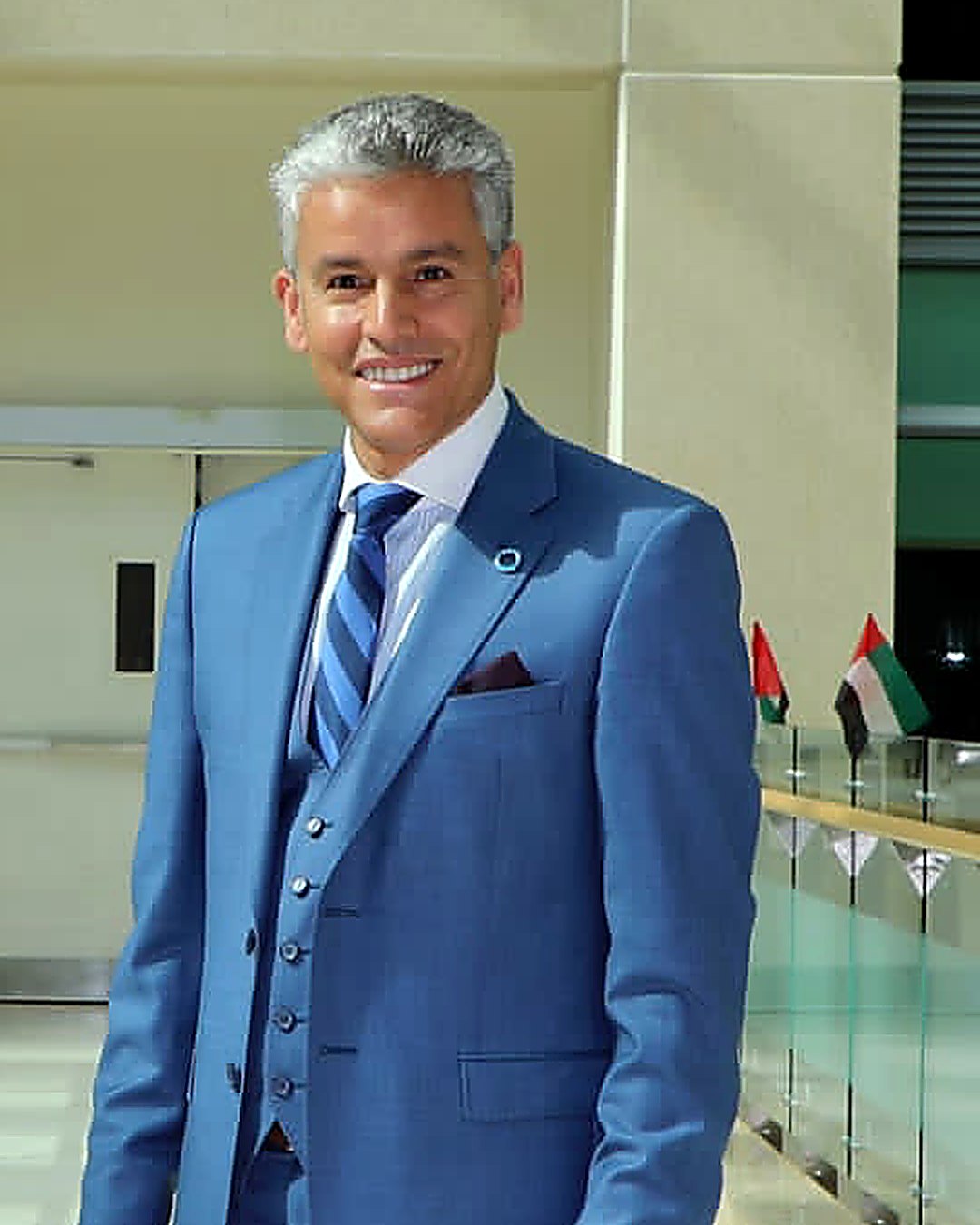
To help you reach your goal and manage your illness through a genuinely integrated system of care.
To achieve good clinical outcomes for my patients — and with them, the best possible quality of life.
Type 1 and type 2 diabetes, from diagnosis through long-term glycaemic control — including screening and management of vascular and nerve complications.
Overactive and underactive thyroid, goitre, and thyroid nodules — with fine-needle aspiration biopsy performed in clinic.
Hormonal conditions arising from the pituitary and adrenal glands, investigated and managed with specialist testing.
Parathyroid dysfunction, calcium disorders, and osteoporosis — diagnosis, treatment, and fracture-risk reduction.
Raised cholesterol, endocrine-related hypertension, obesity, and medically supervised weight management.
Gestational diabetes and pre-existing diabetes through pregnancy, managed alongside obstetric care.
Trained in North Africa, specialised in Britain, and building diabetes services in the Gulf ever since.
Almost everything medicine knows about diabetes was learned from European and North American populations. My work asks a different question: what holds true for the people I actually treat — their genetics, their diet, their fasting, their risk?
Why some patients develop vascular and nerve damage and others do not — mapped through transcriptomic profiling of Emirati patients.
Targeted metabolomics to identify type 2 diabetes years before diagnosis, in the UAE's national population.
How prevalence and risk differ across the ethnic groups and migrant communities that make up the UAE.
Continuous glucose monitoring during Ramadan, so that fasting guidance rests on measurement rather than assumption.
Gestational diabetes, perinatal depression, and glycaemic control in children living with type 1 diabetes.
Meal sequencing, sleep, stress, and diet — trialled as clinical interventions, not general advice.
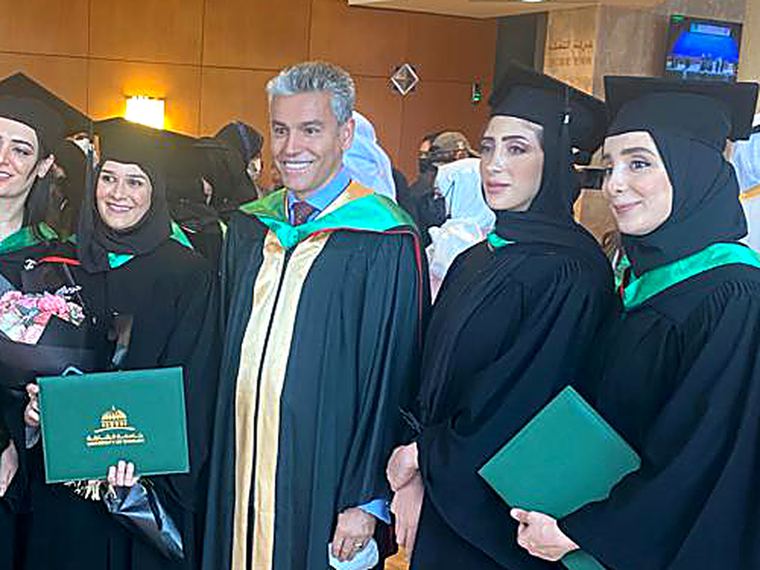
In 2016 I proposed a Master's degree in Diabetes Management for the University of Sharjah. It launched in 2020 as the first programme of its kind in the UAE, and has since graduated five cohorts of clinicians trained to manage diabetes at specialist level.
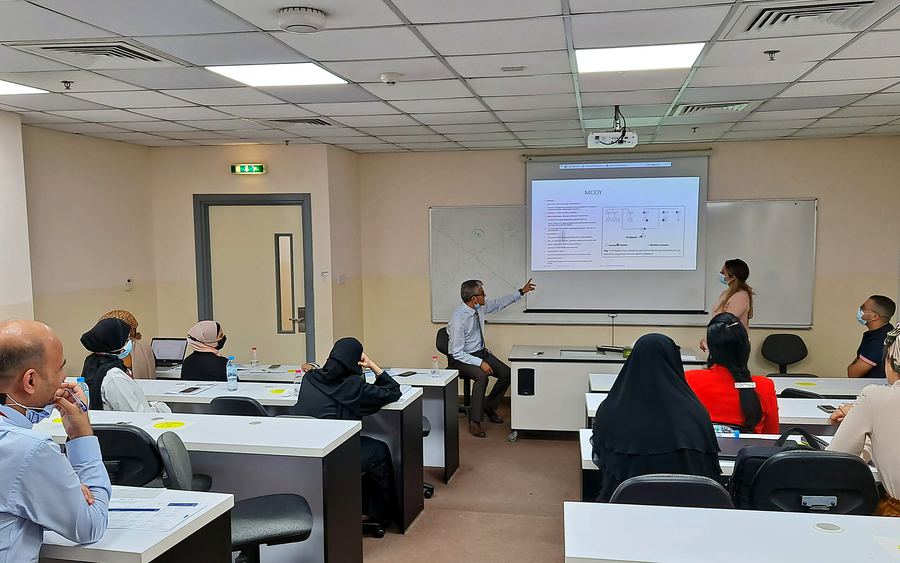
Alongside the Master's, I supervise research projects, run clinical case discussions and presentation-skills workshops, and lecture on the University's postgraduate diplomas in Family Medicine and Diabetes.
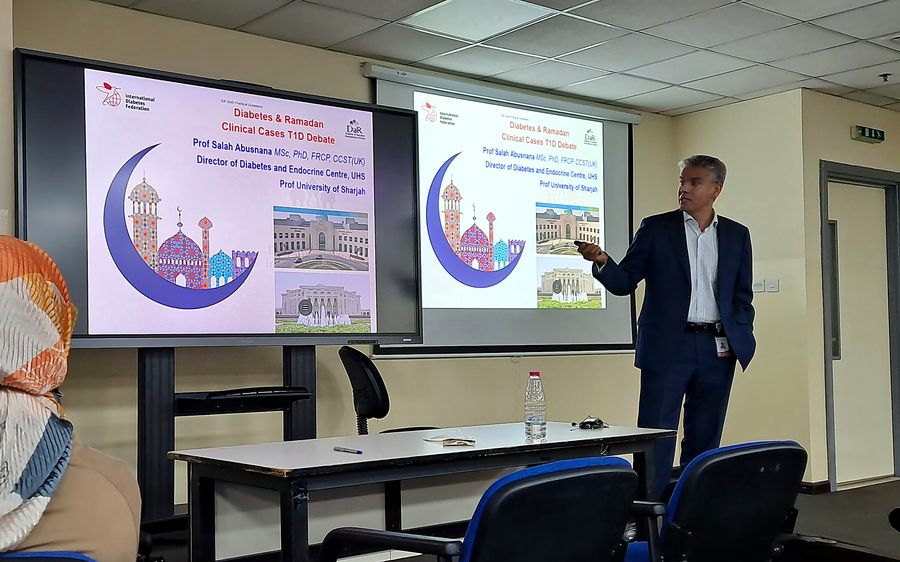
Lecturing on diabetes management during Ramadan — a recurring theme in both my teaching and my research.
I deliver keynote addresses at international conferences and collaborate with the British Endocrine Society, the European Association for the Study of Diabetes, and the American Diabetes Association. I chair board meetings, sit on strategic committees, and advise health authorities across the Gulf.
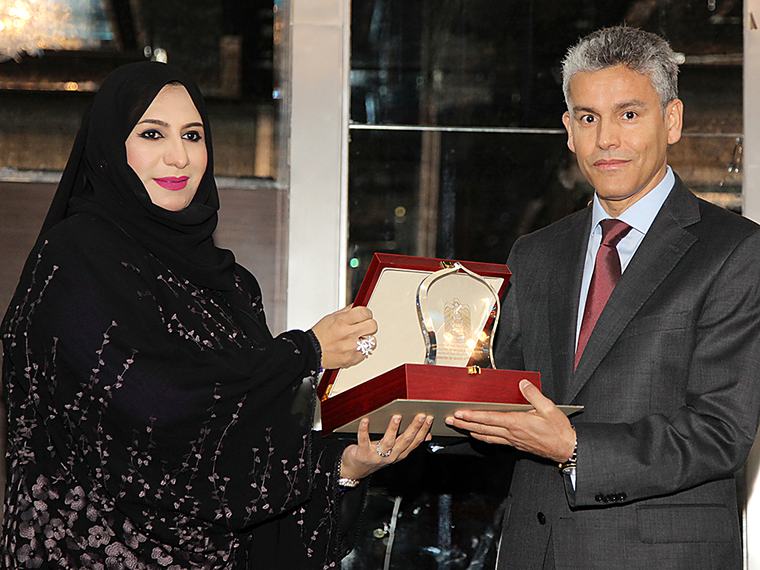
Health ministries, universities and professional societies across the Gulf have recognised this work since 2011. In 2023 the Gulf's endocrinology association awarded its highest individual honour.
Gulf Medical University, Ajman — one of ten separate recognitions received in 2014 alone.
Rashid Centre for Diabetes and Research, Ajman — for leadership as Medical Director.
Interviewed by Al Roeya on opening a specialised iodine-testing laboratory at the Rashid Centre — capable of processing 100,000 samples a day, and built to address iodine deficiency and thyroid disease across the UAE and the Gulf.
Al Roeya (الرؤية), 15 July 2013
He didn't just treat my condition — he gave me an integrated plan and the understanding to manage it myself. That made all the difference.




I see patients at University Hospital Sharjah. For appointments, calling the clinic directly is usually the quickest route.
Please do not send urgent medical information through this form. In an emergency, contact your local emergency services.